What We Check After the Display Is Assembled
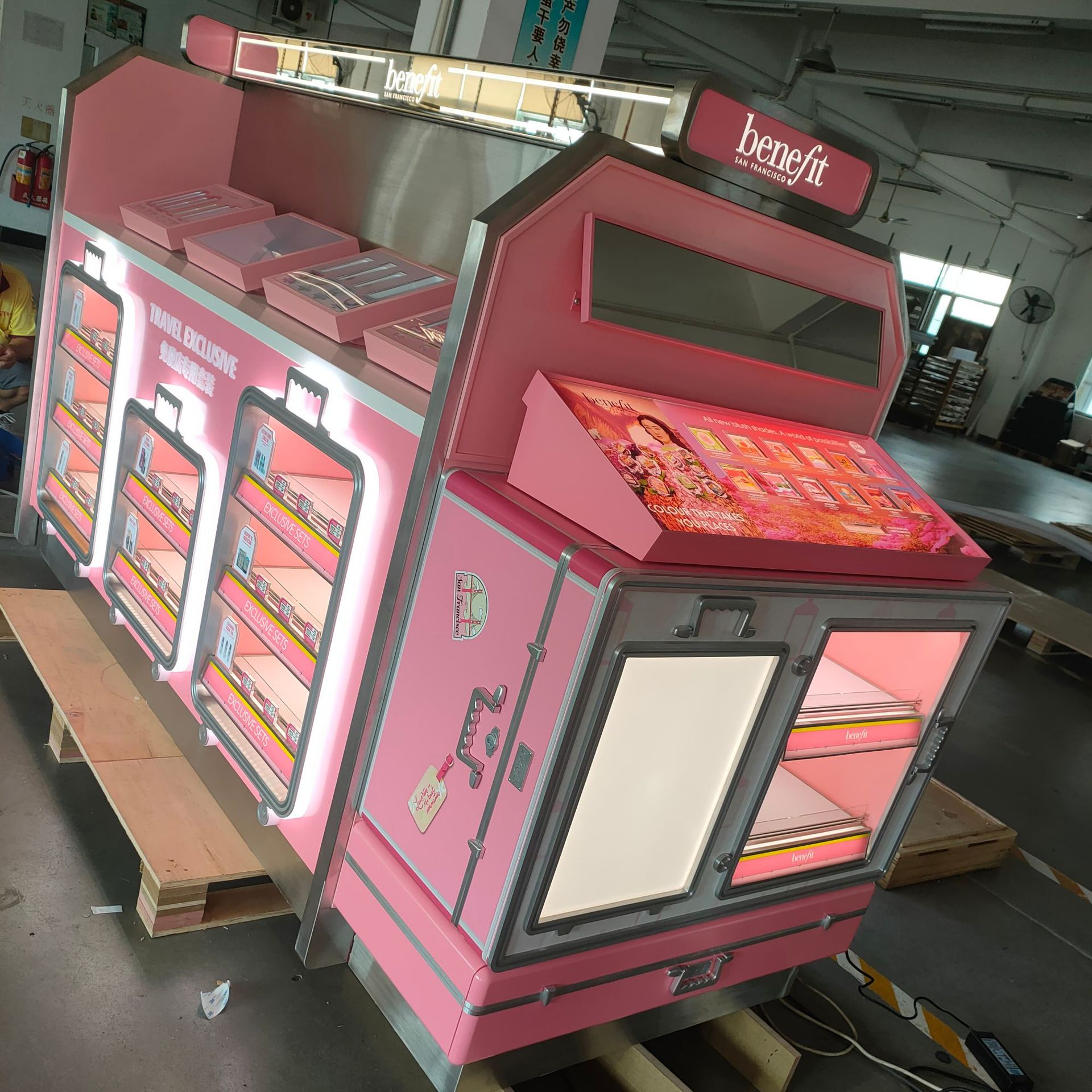
Individual parts may look fine. The real test starts when they come together.
We normally check individual parts during production, but for a retail display, that is not the end of the inspection.
Once the metal frame, acrylic parts, wood panels, graphics and hardware are put together, we sometimes find things that were not obvious when the parts were checked separately.
A hole may be slightly out of position. An acrylic panel may fit too tightly. A shelf may not sit level, or the gap around a door may look different after the whole unit is assembled.
This is why we prefer to pre-assemble displays before shipment whenever the project allows it.
Different materials and manufacturing processes have their own tolerances.
A welded metal frame may have slight distortion. Acrylic parts have dimensional tolerances. Wood or MDF components can also change slightly during machining and finishing.
When we check these parts separately, each one may look acceptable.
But once metal, acrylic, wood, graphics and other components have to fit together, small differences can start to affect the final assembly.
For example, we may find:
These are the kinds of issues we want to find before the display leaves the factory.
1. Small Tolerances Can Become Bigger Problems After Assembly
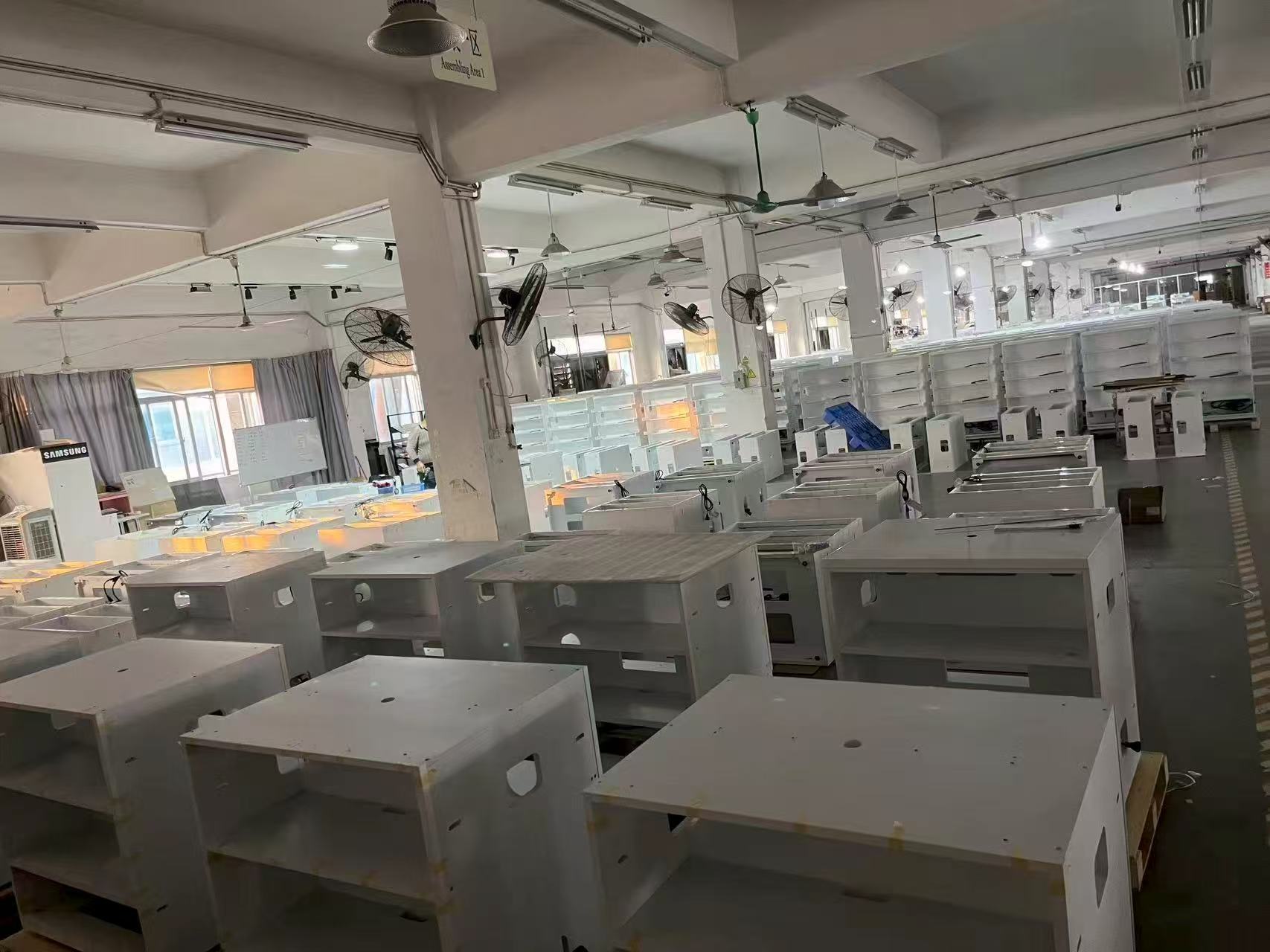
A few millimeters on one component can affect the fit of the whole display.
Passing component inspection does not necessarily mean the complete display will assemble correctly.
This becomes even more important when one display combines several materials and processes.
A typical retail display may include a metal structure, acrylic parts, wood panels, printed graphics, lighting, hardware and externally sourced components.
Each part may come from a different production process.
But the customer does not receive these processes separately.
The customer receives one finished display.
That means the final fit between all the components matters just as much as the quality of each individual part.
For mixed-material projects, pre-assembly gives us the opportunity to check how those components actually work together before packing.
2. Pre-Assembly Is Especially Important for Mixed-Material Displays
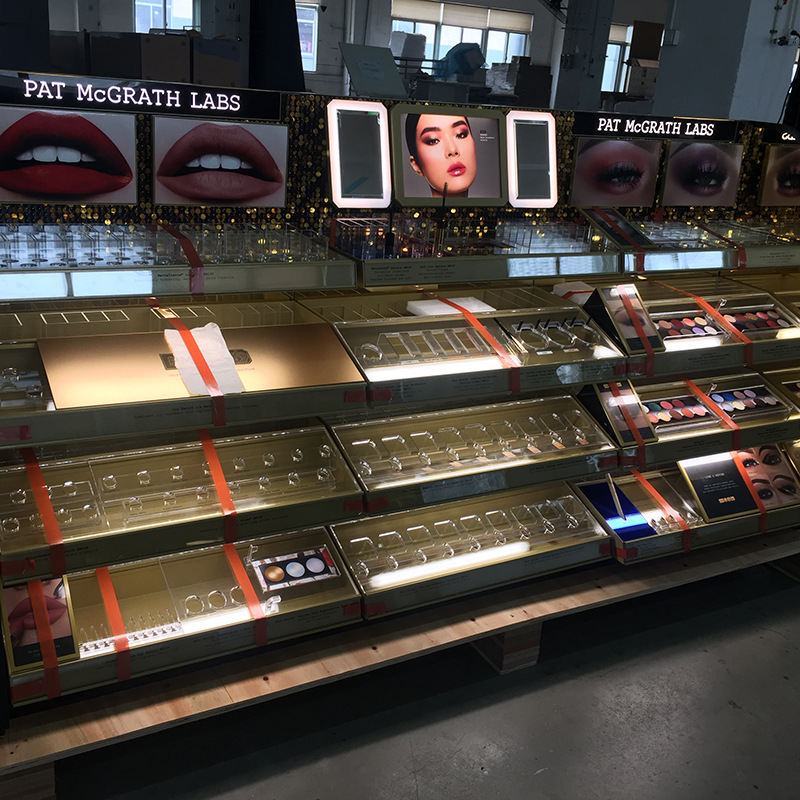
Different processes. One finished display.
Once the display is assembled, we are not only checking whether it can stand up.
We look at the complete product from several different angles.
We check the key dimensions against the approved drawing and make sure the main components fit together as intended.
We pay particular attention to connection points, hole positions, shelves, panels, product holders and other areas where different components meet.
For knock-down displays, we also check whether the display can be assembled and disassembled without forcing the parts into position.
3. What Do We Check After Assembly?
Overall Dimensions and Fit
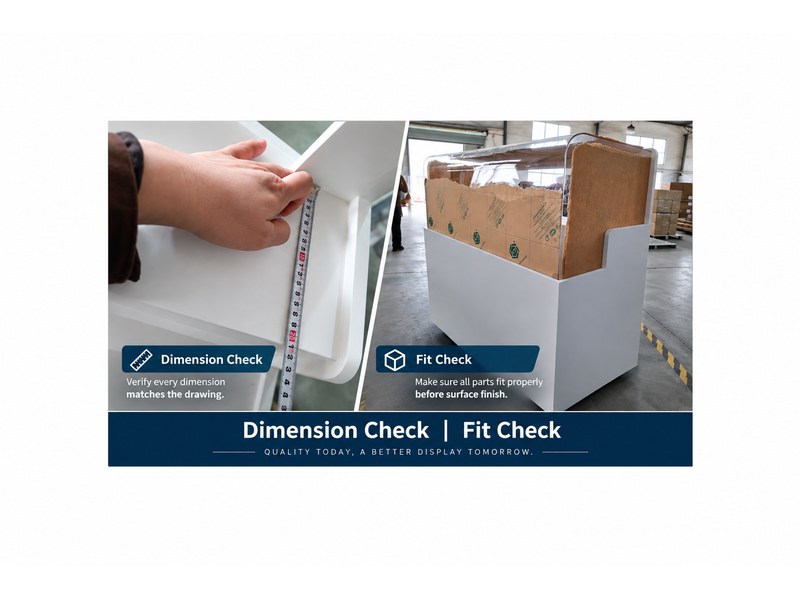
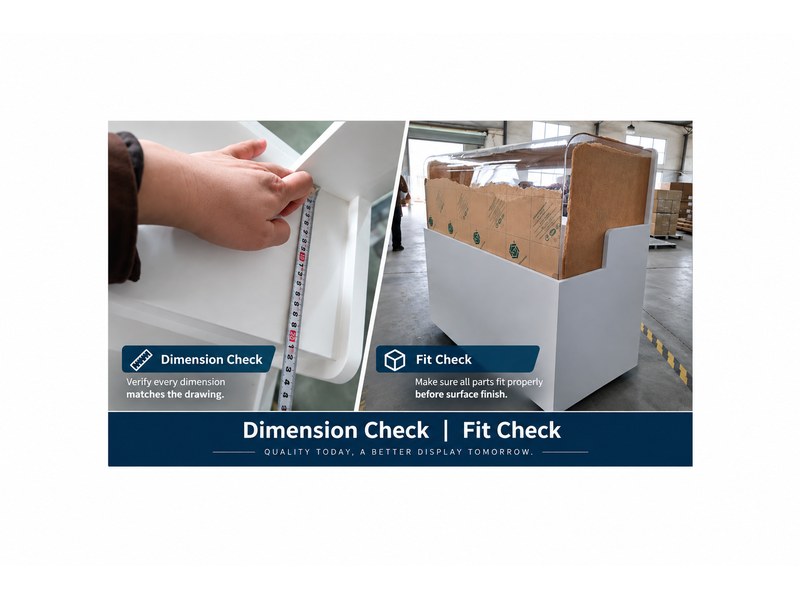
After assembly, it becomes much easier to see whether the complete structure is straight and balanced.
We check:
A display can be dimensionally close to the drawing and still not look right when assembled.
That is why we look at both measurement and the finished assembly.
Alignment, Gaps and Stability
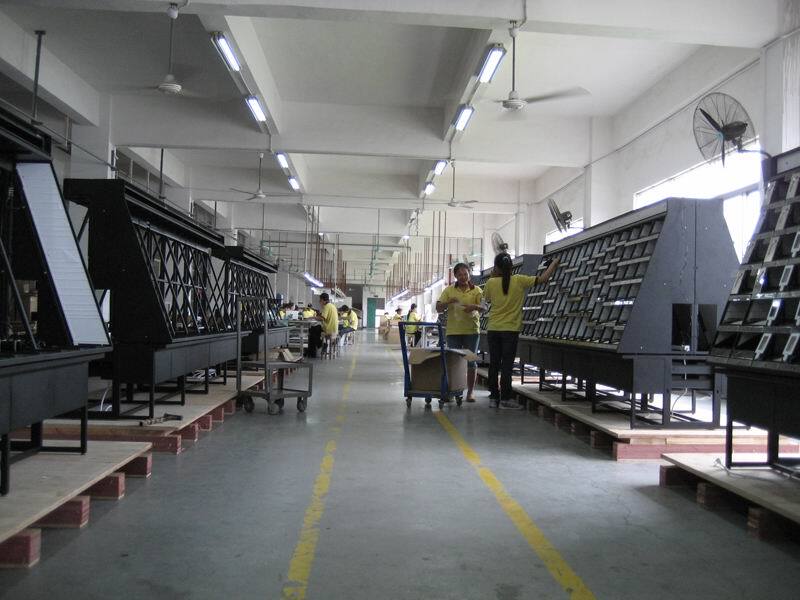
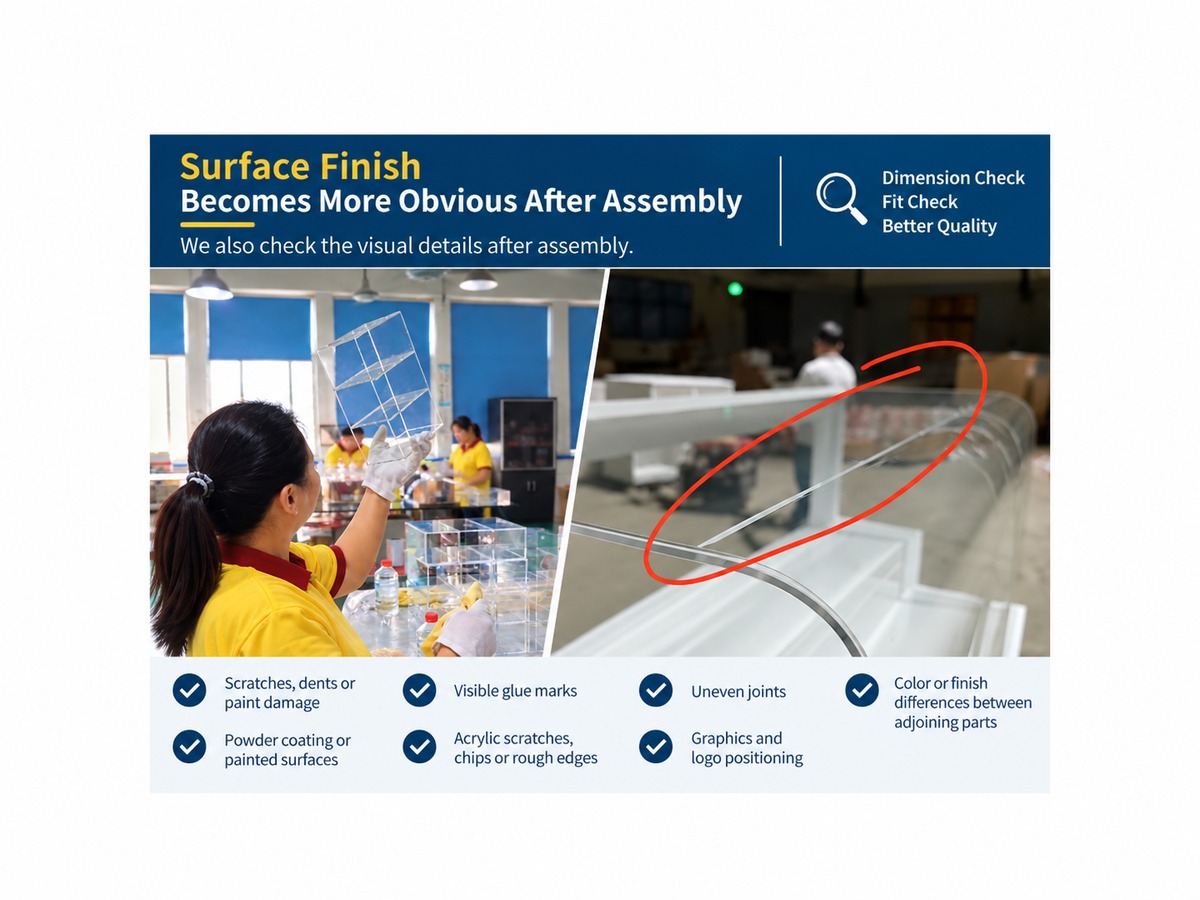
We also check the visual details after assembly.
Depending on the project, this can include:
Some defects are easy to miss when a component is sitting alone on a workbench.
Once the complete display is assembled, especially under normal lighting, they can become much more noticeable.
4. Surface Finish Becomes More Obvious After Assembly
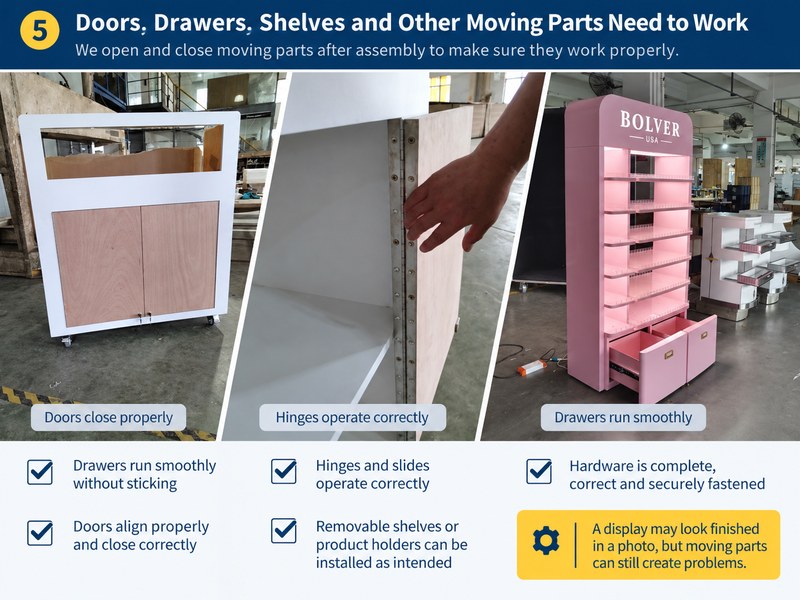
For displays with doors, drawers, hinges, slides or other moving components, visual inspection alone is not enough.
We open and close them after assembly.
We check whether drawers run smoothly, doors align properly, hinges operate correctly and removable shelves or product holders can be installed as intended.
Hardware should also be checked for missing, incorrect or loose components.
A display may look finished in a photograph but still create problems if a drawer sticks or a door does not close correctly.
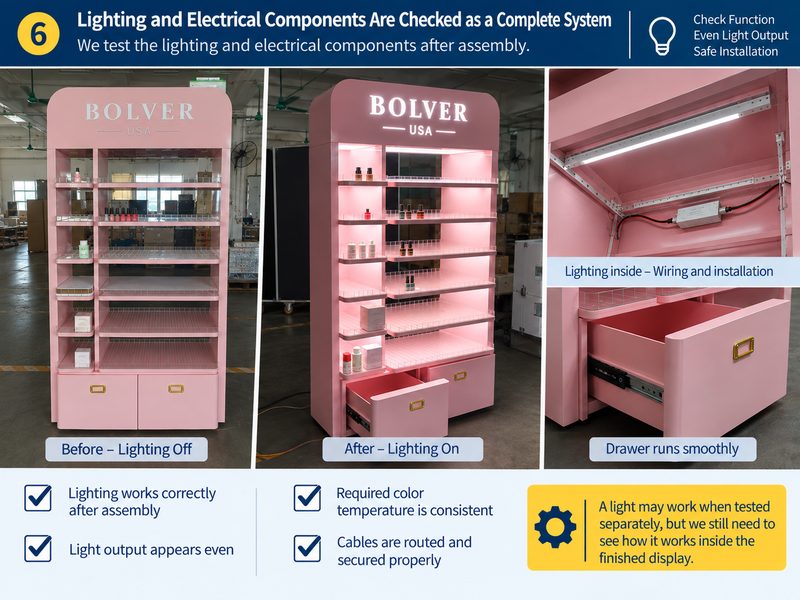
If the display includes LED lighting, illuminated logos, screens or other electrical components, these should also be checked after assembly.
Depending on the project, we check whether the lighting operates correctly, whether the light output appears even, whether the required color temperature is consistent and whether cables are routed and secured properly.
The reason for doing this after assembly is simple:
A light may work when tested separately, but we also need to see how it works inside the finished display.
5. Doors, Drawers, Shelves and Other Moving Parts Need to Work
6. Lighting and Electrical Components Are Checked as a Complete System
Pre-assembly can reveal another problem that drawings do not always show clearly:
Is the display practical to assemble?
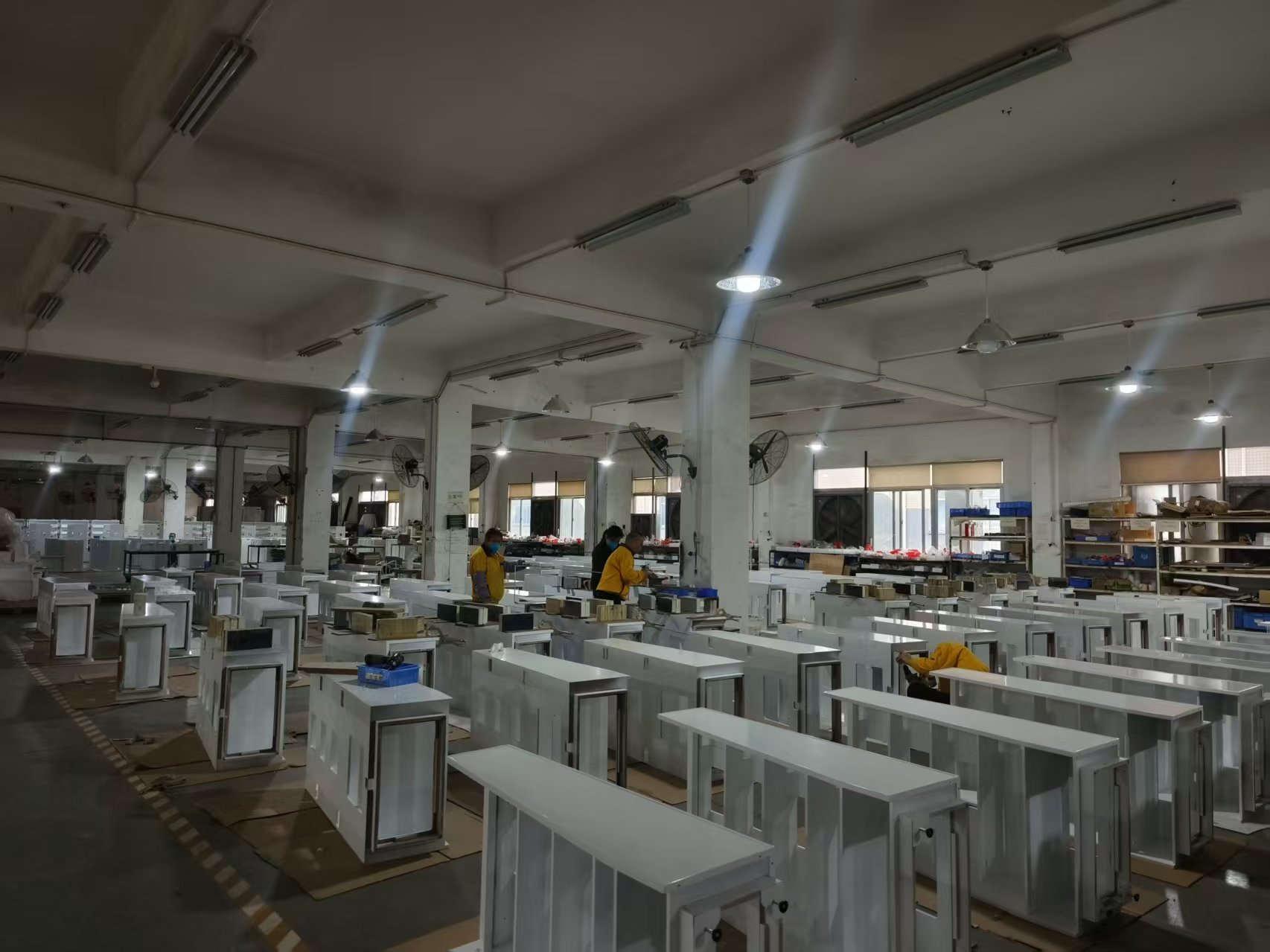
Sometimes all the parts are correct, but the assembly sequence is unnecessarily difficult.
A screw may become inaccessible after another panel is installed. Two similar fittings may be easy to confuse. A component may need to be installed in a particular order.
Finding this during trial assembly gives us a chance to improve the assembly method, identify hardware more clearly or prepare better instructions before shipment.
This is particularly important for displays that will be shipped knock-down and assembled by another team overseas. If assembly is difficult in the factory, it will not become easier after the display arrives overseas.
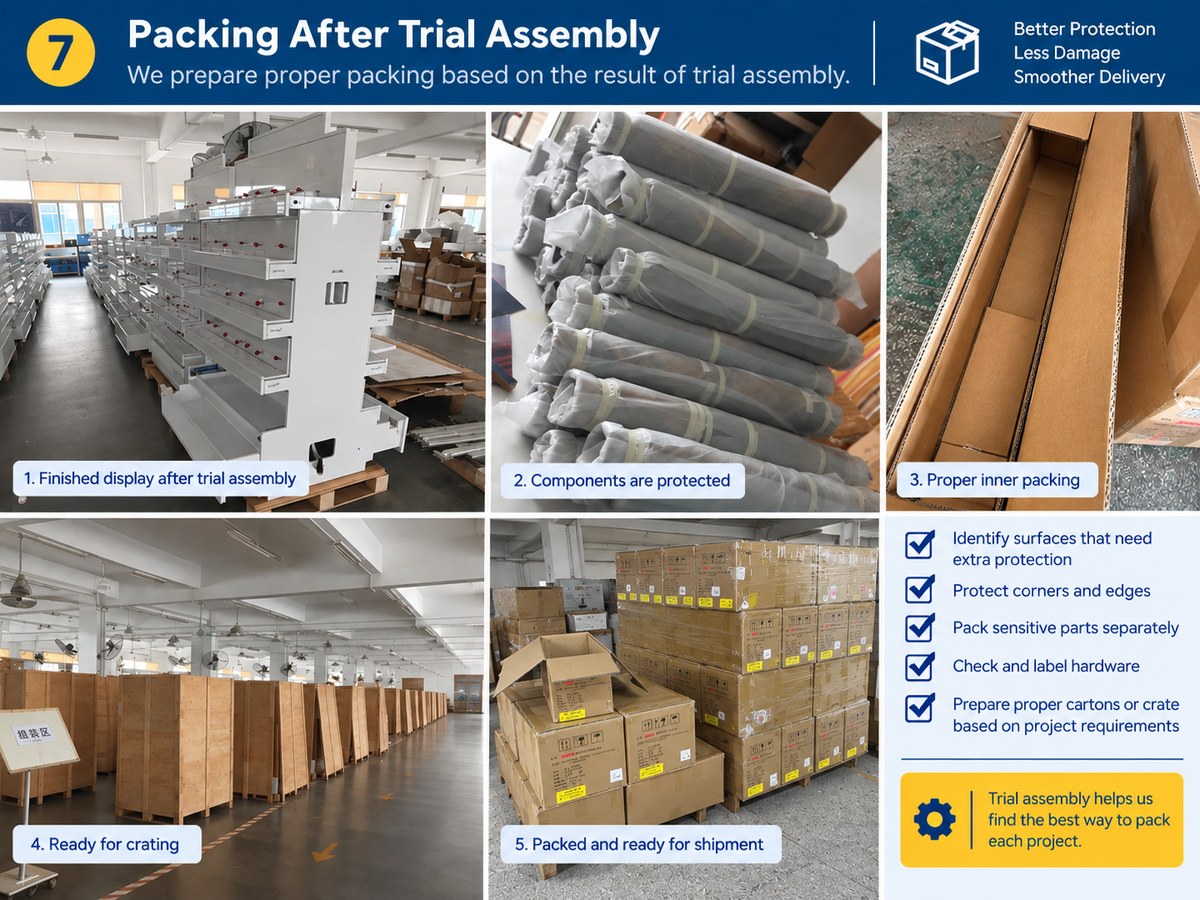
Pre-assembly also helps us understand how the finished components should be protected for transportation.
After trial assembly, we know more clearly:
The display is then disassembled where necessary, cleaned and prepared for packing according to the project requirements
If we find a fitting problem here, we still have the drawings, equipment and production team available to correct it.
Finding the same problem after the display has arrived in another country is much more difficult.
For us, that is the main reason for pre-assembly: find the problem before packing, not after delivery.